ClearMax Labs installs door access control for Miami businesses as one written project: the readers people badge at, the electric lock on each door, the controller that decides who gets in, and the cable between them. ClearMax technicians wire and test every door on site, and each exit still opens from the inside the way the Florida Building Code describes.
Last updated: November 2026
Who plans a door access project in Miami?
Usually the person who carries the keys today. An owner opening a second location, an office manager holding keys former staff never returned, a facilities manager replacing an old keypad, or a property manager setting up entry for tenants with their own hours. Each starts with a list of doors and a reason for each. That list is the first thing the written scope is built from.
Which doors get a reader, and which stay on a key?
Most buildings land on three to six controlled doors. The ones that come up most often:
- The main entrance, because it is the door everyone uses and the one where lost keys hurt most.
- A side or back door used for deliveries, smokers or staff parking, which tends to get propped open.
- The IT or server room, where the network equipment for the whole building sits.
- Stock, storage or records rooms, where only a few people should go.
- A stair door or a gate on a multi-tenant floor or a parking area.
Private offices and break rooms rarely need a reader; a plain lock does that job.
What do people badge with?
Two kinds of credential, often side by side:
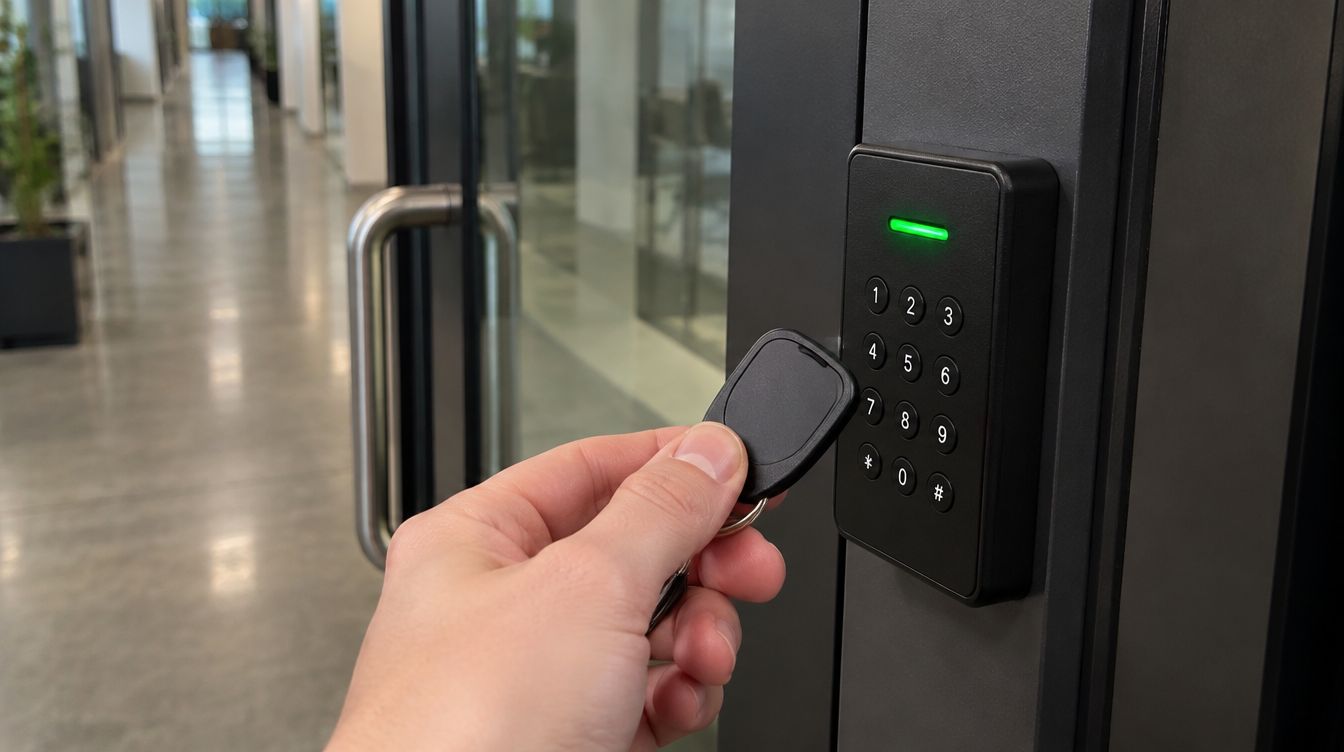
- Cards and fobs. Easy to hand out on a first day and switch off on a last day. A lost fob is disabled from the software instead of solved by changing locks.
- Phones. A credential sent to a staff phone, useful for people who come and go at odd hours or work across two locations.
Every person gets their own credential and a schedule: staff weekdays, cleaners in the evening, a vendor for one morning. The system keeps a record of which credential opened which door and when, which is the answer the next time someone asks who was in the building on a Saturday.
What locks the door, and how does it still let people out?
Each door gets locking hardware matched to its frame, its glass and how people use it. Two kinds cover most commercial doors:
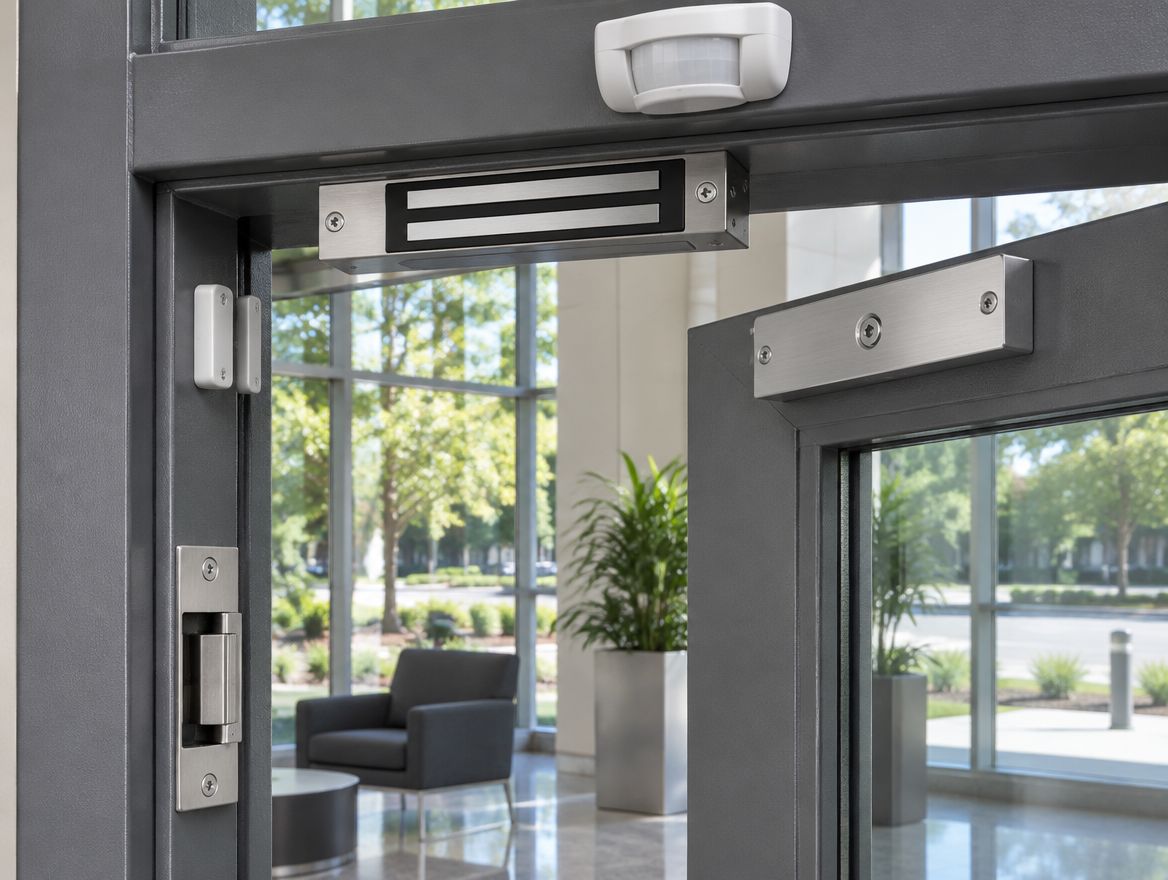
- An electric strike replaces the strike plate in the frame and releases the latch when the reader approves someone. The door keeps its normal lever or push bar.
- A maglock holds the door closed with an electromagnet at the top of the frame. It suits glass storefront doors and doors with no room in the frame for a strike.
Getting in is the part people notice. Getting out is the part the code governs, and it decides what gets ordered. Florida's building code says unlatching any door or leaf must not take more than one operation. On top of that, the code describes two ways an electrically locked door on the way out of a building may be set up:
The hardware itself releases the lock. Under Section 1010.2.11 of the 2023 Florida Building Code, turning the inside handle or pushing the bar has to cut power to the electric lock directly and unlock the door at once, the hardware has to work with one hand with an obvious method of operation, and the lock must unlock automatically if its power is lost. Nothing on the way out depends on the controller.
A sensor releases the lock, with a button as backup. Section 1010.2.12 lets a sensor on the inside unlock the door as someone approaches, provided a manual device signed PUSH TO EXIT sits 40 to 48 inches above the floor within 5 feet of the door, cuts power to the lock independent of other electronics, and keeps the door unlocked for not less than 30 seconds. The same section says that where a building has a fire alarm system, its activation must unlock that electric lock automatically, and the lock stays unlocked until the fire alarm system is reset. The door plan records which doors use sensor release, so that requirement is known before anything is ordered.
The code permits delayed egress locking only in buildings equipped throughout with an automatic sprinkler system or an approved automatic smoke or heat detection system, and then only for listed occupancy groups.
Where do the reader and the button go on the wall?
Where people of any height and grip can use them. The Florida code puts door handles, pulls, latches, locks and other operating devices at 34 inches minimum and 48 inches maximum above the finished floor. The 2010 ADA Standards set the high limit for an unobstructed forward reach at 48 inches and the low limit at 15 inches, so readers and exit buttons are mounted inside that band, beside the door and clear of the swing.
Where does the controller live, and what runs back to it?
The controller is a panel in the IT room or a locked closet. It holds the door schedules, talks to each reader and drives each lock. From every controlled door a cable run comes back to it carrying the reader signal, the lock power, the door position contact and the request-to-exit input. Each run is labeled at both ends and tested before the ceiling closes.
What changes with several doors or several locations?
Nothing about the doors, a great deal about the administration. One system can carry every door at every location, with one list of people and one set of schedules. Someone who works at two branches gets one credential that opens both. Someone who leaves is removed once, everywhere. A tenant on the third floor can hold access to the lobby, the elevator lobby and their own entry, and nothing else.
How do Miami permits and the 2026 code change affect the schedule?
They decide when work can start, so they go on the schedule from day one.
- Miami-Dade County's construction permitting procedures list access control among the trades whose new permit applications require submitted plans, alongside building and electrical work.
- Miami-Dade Fire Rescue's life safety pre-submittal checklist requires that all door hardware comply with NFPA 101 section 7.2.1.5, and it asks about access-controlled egress doors against NFPA 101 section 7.2.1.6. An access door on the way out of the building is therefore a fire review item as well as a building one.
- The county's permitting center says the ninth edition of the Florida Building Code becomes effective on December 31, 2026, and permit applications and plans submitted on or after that date must comply with it. A project filed in late December is filed under one edition or the other.
The City of Miami and several other cities in the county run their own building departments. The written scope names which department reviews the address.
What comes with the doors?
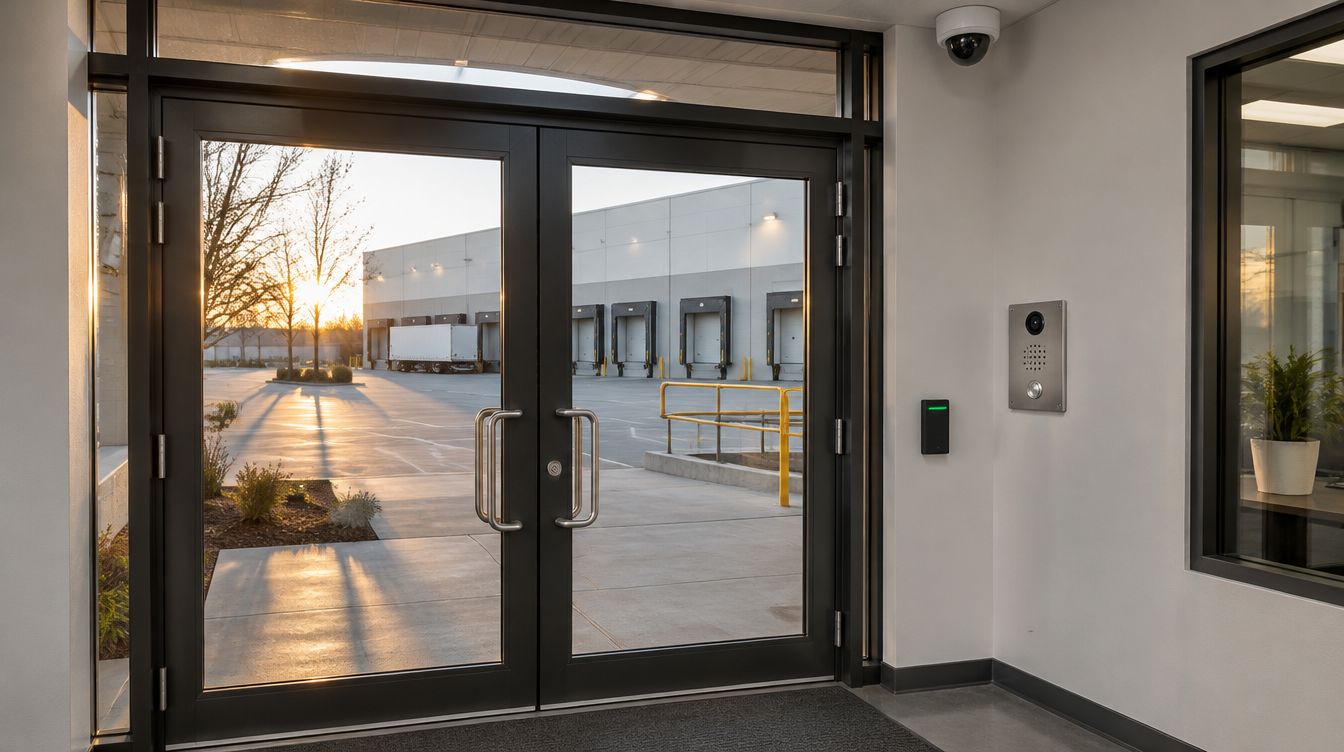
Two add-ons sit on the same project and the same cable plan. An entry intercom lets a visitor call from the door and be let in from the front desk or a phone. A camera at the door records who came through, on recording equipment the business keeps. After handover, service and upkeep covers badge changes, hardware adjustments and inspections.
What Miami owners ask before they send the door list
Do we have to choose a reader brand?
No. ClearMax Labs is vendor-neutral. The scope describes each part by what it has to do, and the hardware is chosen for the door, not for a sales relationship.
What do we send to get a quote?
The address, a list of doors with what each one protects, how many people need credentials, and the date the space has to be ready. Photos of each door and its frame help. The project form asks for exactly that.